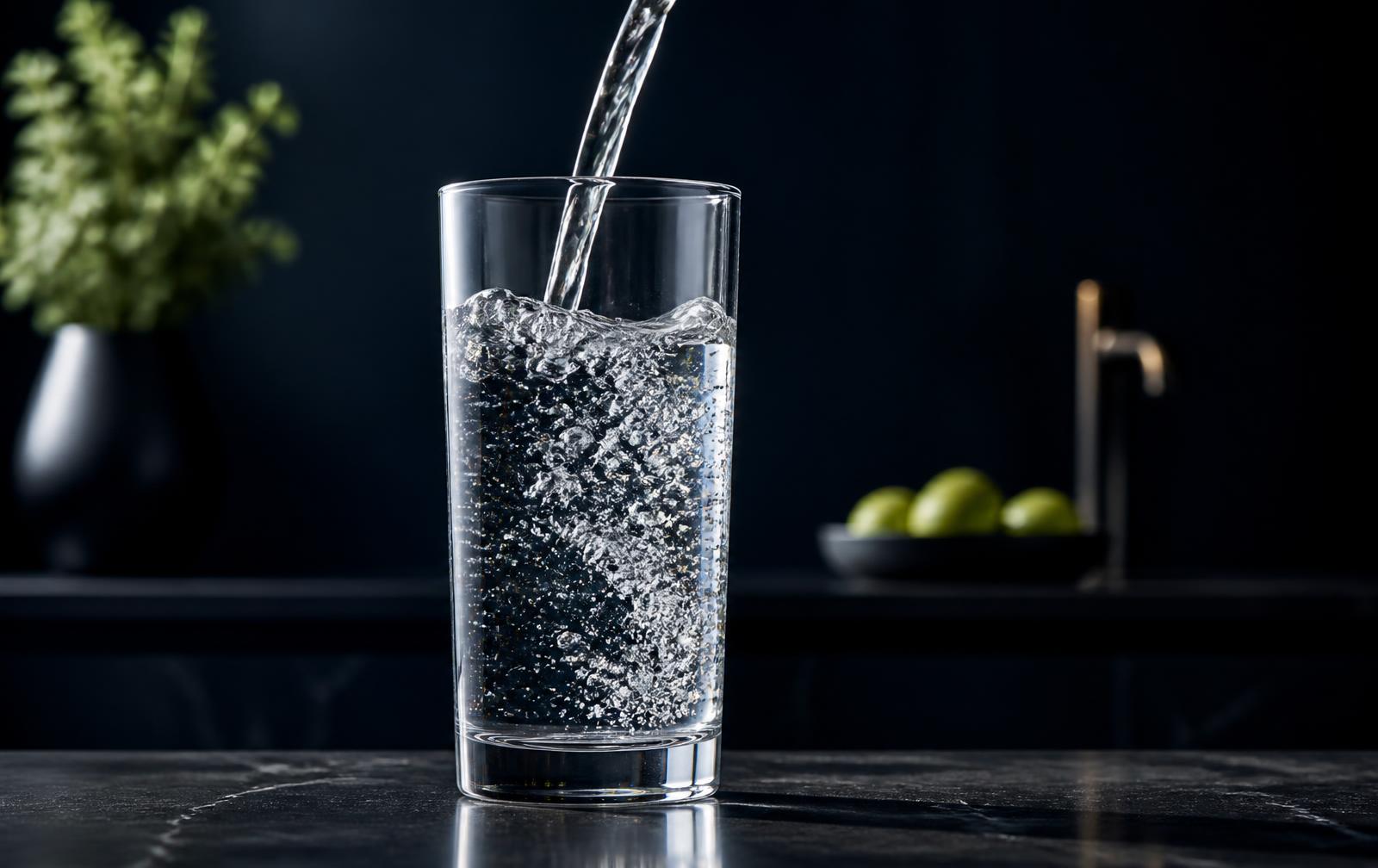
Drinking water
The one health decision you repeat eight times a day.
Most people change their diet once a year and their water never. LonGeVa treats drinking water as the daily intervention it actually is: contaminants reduced, minerals kept, at every tap in the building.
Why it matters most
Purity is only half the question. Minerals are the other half.
Conventional thinking treats drinking water as a contamination problem: remove everything and the water is safe. But water is also a nutrient carrier, and stripping it empty removes the calcium and magnesium the body was expecting to receive.
A household drinks and cooks with the same water every day for decades. That repetition is what makes water chemistry matter more than almost any single supplement — small differences compound over a lifetime.
LonGeVa is engineered for exactly that case: reduce what should not be in the water, keep what should, and do it without salt, chemicals or a reject stream running to drain.
Health benefits
Six reasons drinking water carries the most weight
Nothing exotic and nothing that asks for a new habit — just a better version of something already consumed several litres a day.
Hydration that reaches the cell
Water carrying magnesium and calcium moves into cells more readily than demineralised water, which is why mineral-intact water hydrates rather than simply passing through.
Magnesium you actually drink
Drinking water is one of the few magnesium sources people consume every single day, several times a day, without changing a habit or remembering a supplement.
Cardiovascular and metabolic support
Calcium and magnesium in water contribute to daily mineral intake — the reason health authorities caution against long-term consumption of fully demineralised water.
Better for children and older adults
The two groups most sensitive to mineral intake and to contaminants are also the ones drinking from the same tap. Reducing pollutants without stripping minerals serves both.
Taste people notice immediately
Removing chlorine and its by-products changes tea, coffee and plain water on the first glass. Minerals give it the body that reverse-osmosis water lacks.
No routine, no consumable
No salt to carry, no bottle to buy, no timer to remember. The system works on flow alone, so the healthy option is also the effortless one.
What is reduced
Removed, reduced, converted — and what stays
The media handles four jobs at once. Only one of them is removal in the conventional sense.
Chlorine & by-products
Free chlorine, chloramine and the taste and odour compounds that come with disinfection are reduced across the whole flow.
Heavy metals
Lead, copper and iron picked up from older building pipework — often added after the water leaves the municipal works.
Micropollutants
Pharmaceutical residues, pesticides and PFAS-class compounds increasingly detected in European supplies.
Scale-forming hardness behaviour
Hardness is converted, not exchanged: calcium and magnesium stay in the water while losing the ability to build scale.
What stays: calcium, magnesium and the natural mineral signature of the source. That is the deliberate difference between LonGeVa and a demineralising system.
At home
Two ways to get it to the tap
Whole-home treatment for every outlet, or a point-of-use system where only the kitchen matters.
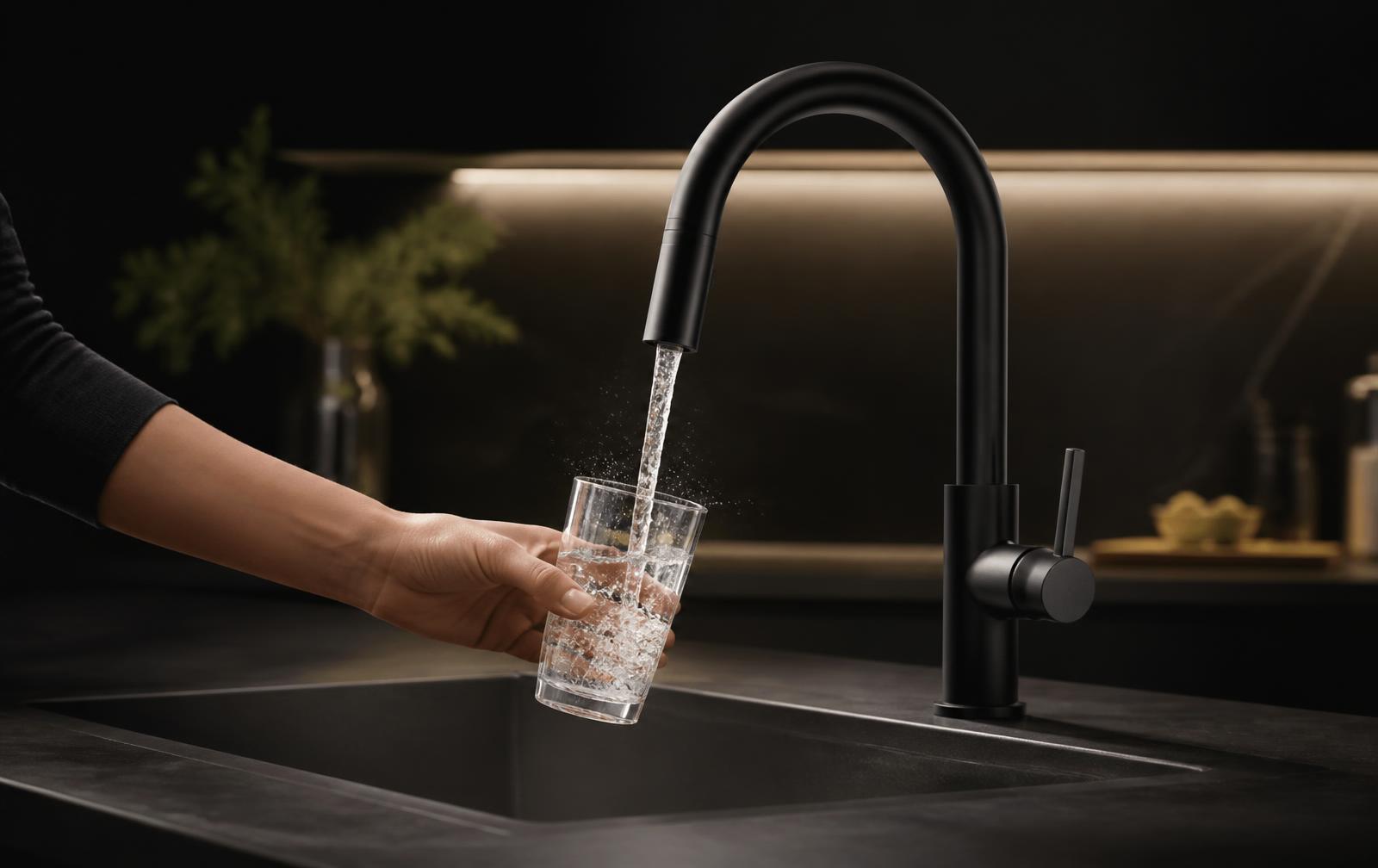
Whole-home point of entry
One vessel treats every tap and shower in the building. Drinking water, cooking water, bathing water and appliance protection from a single installation with no drain and no power.
See the systems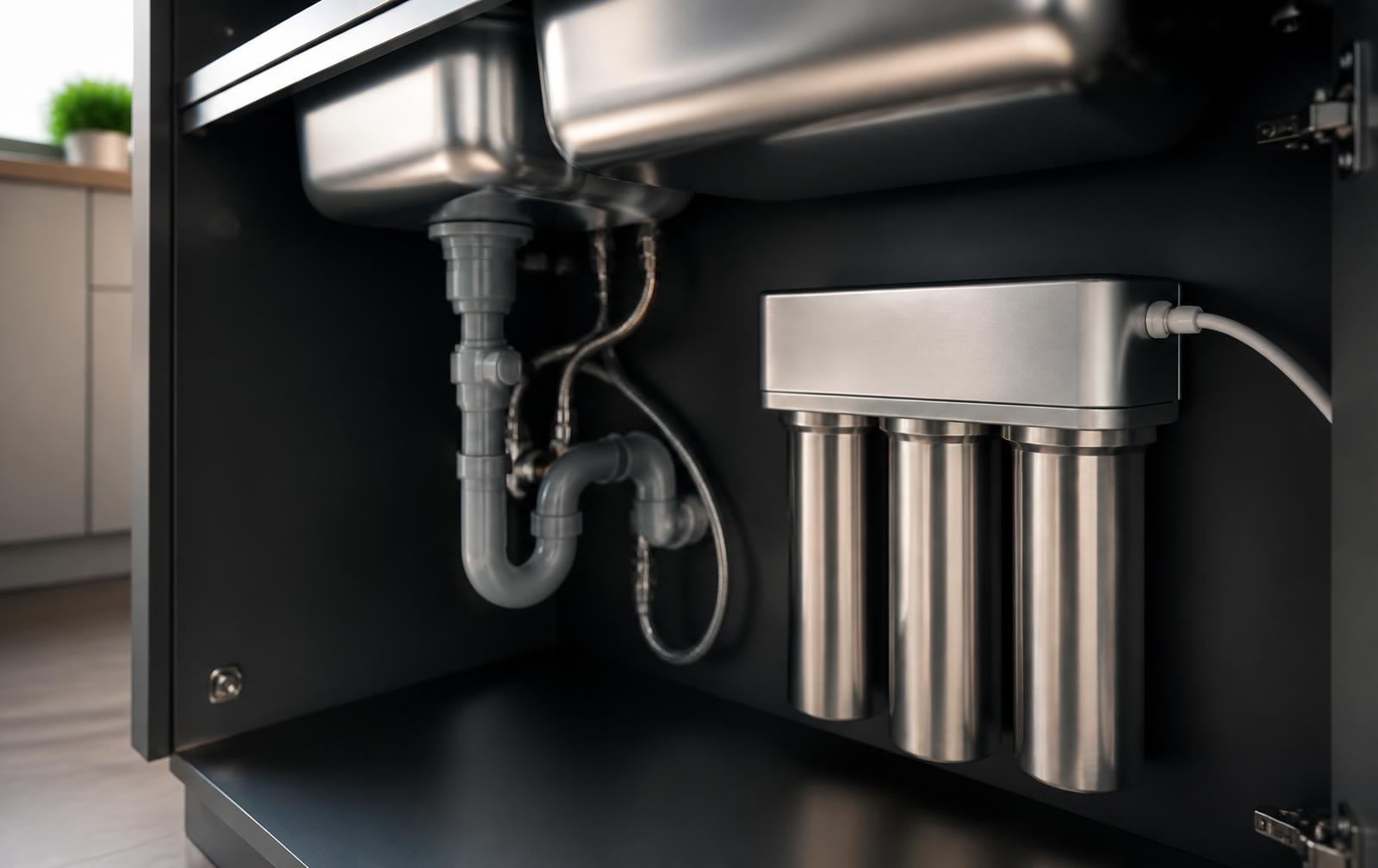
Point of use, under the sink
Where a whole-home retrofit is not practical — apartments, rentals, single kitchens — the same media works under the sink and serves the drinking and cooking tap.
Size a systemFAQ
Drinking water questions
Get advice
Tell us what comes out of your tap.
Three short steps. Each answer pre-fills the next, so by the last screen your enquiry is already written — a Watch Water engineer replies with a drinking water recommendation, no obligation.
Step 1 of 3
What do you need water for?
Your answer pre-selects the sizing questions and the application on your enquiry.