LonGeVa Media
The innovation the whole
series is built on.
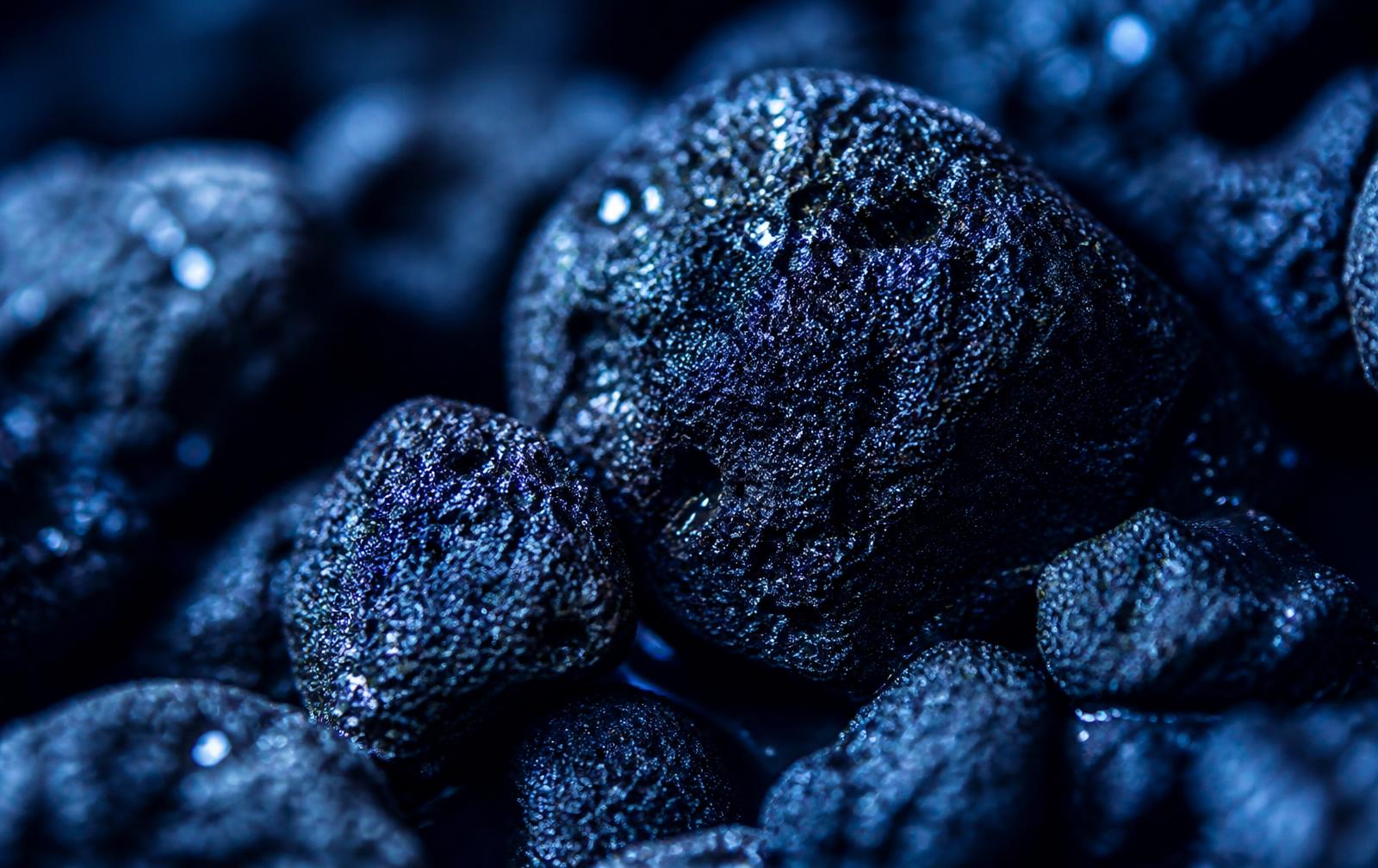
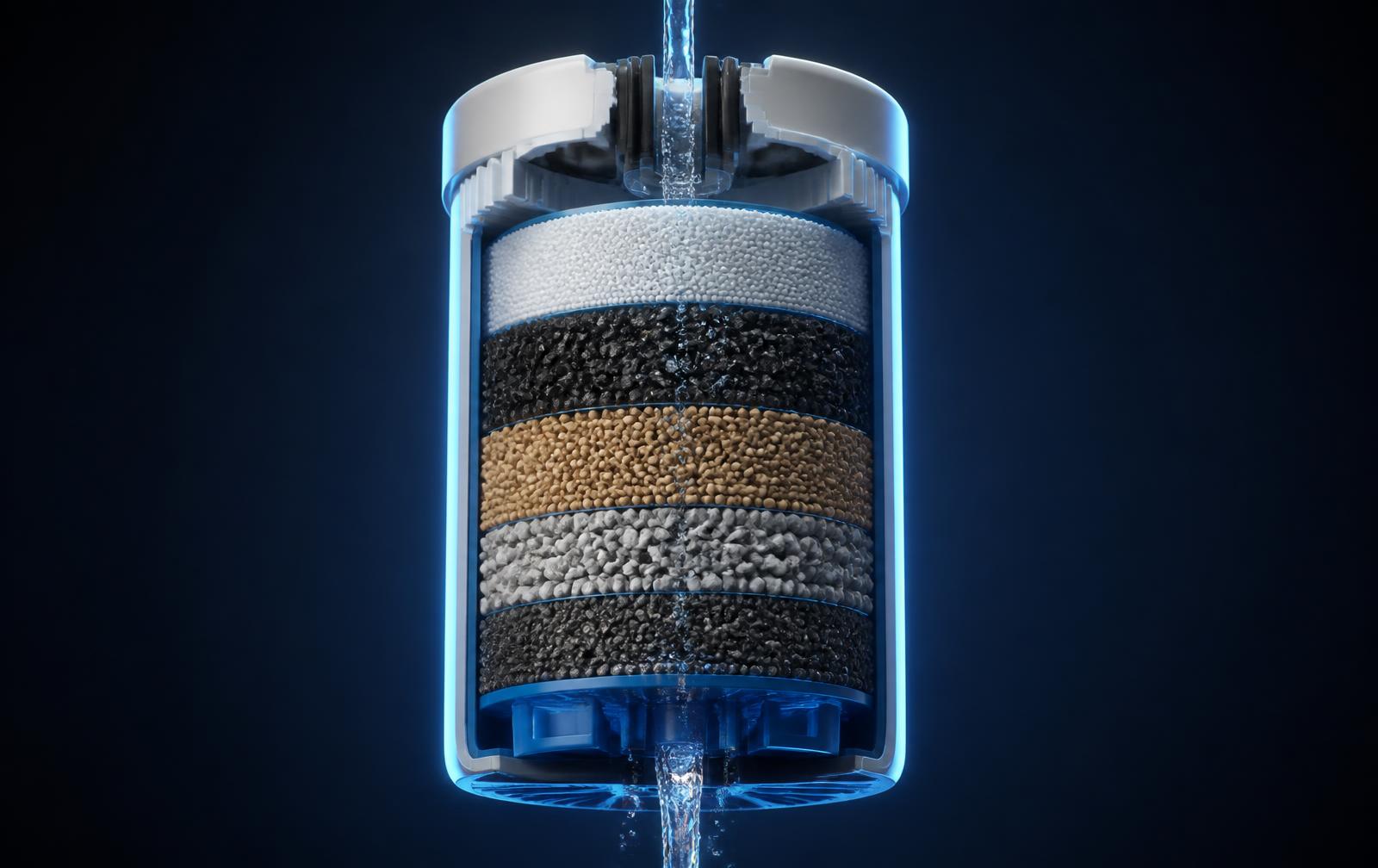
LonGeVa Media is the invention: a single, factory-premixed bed in which four engineered intelligences work together. Developed and manufactured by Watch Water GmbH in Mannheim, Germany.
The four intelligences
Not a blend of filters. A designed chemistry.
Each layer solves a problem the others cannot, and none of them undoes another's work. That interaction is what makes LonGeVa Media difficult to imitate.
Mineral intelligence
TrappSorb
A structured mineral matrix that traps and sorbs unwanted ionic species — including heavy metal cations — while leaving calcium and magnesium in solution. It is the reason LonGeVa can clean water without demineralising it.
Adsorption intelligence
Catalytic Carbon-MG
Magnesium-enhanced catalytic carbon. Unlike standard activated carbon, it destroys chlorine and chloramine catalytically instead of merely holding them, and adsorbs organics, pesticides, VOCs, pharmaceutical residues and PFAS compounds such as PFOA and PFOS.
Scale intelligence
FilterSorb SP3
Nucleation assisted crystallisation converts dissolved hardness into stable, non-adhering microcrystals that pass harmlessly through pipework. No ion exchange, no sodium, no regeneration cycle, no brine.
Redox intelligence
AquaRedox
Shifts oxidation-reduction potential downward and stabilises the treated water, reducing oxidative load and supporting the mineral balance the other layers preserve.
Inside the bed
What happens in the seconds water spends inside
Treatment is a contact process, not a barrier. Everything depends on where water meets which surface, and for how long.
- 01
Sediment and turbidity are held back
Suspended particles are captured at the leading face of the bed so downstream surfaces stay available for chemistry rather than being blinded by solids.
- 02
Chlorine and chloramine are broken catalytically
Magnesium-enhanced catalytic carbon converts free chlorine and chloramine rather than storing them, which is why capacity does not collapse the way a saturated carbon block does — while still adsorbing PFAS, PFOA, PFOS, pesticides and VOCs.
- 03
Organics and trace synthetics are adsorbed
Pore structure across a wide size distribution gives adsorption sites for taste and odour compounds, pesticide residues, pharmaceutical traces and PFAS-type molecules.
- 04
Hardness is crystallised, not exchanged
Nucleation sites convert dissolved calcium and magnesium into stable microcrystals. Hardness minerals stay in the water but lose the ability to bond to pipe, heater and appliance surfaces.
- 05
Redox potential is settled
The final layer shifts and stabilises oxidation-reduction potential so the treated water leaves the vessel chemically consistent rather than variable with feed conditions.
Why premixed matters
Six practical advantages
Premixing is not a packaging convenience. It fixes the contact ratio between layers, which is the variable that decides whether treatment is repeatable from one installation to the next.
Premixed at the factory
The ratio between the four intelligences is set in Mannheim, not by an installer on site. Every vessel performs identically.
One bed, one vessel
Replaces the multi-tank, multi-chemical trains that conventional treatment requires — less footprint, less failure surface.
No regeneration
No salt tanks to refill, no brine discharge, no regeneration downtime and no sodium added to your drinking water.
No electricity or dosing
The media works on contact chemistry. Nothing to power, nothing to calibrate, nothing to run out of mid-week.
Long service life
Multi-year media life under normal residential loading, with replacement determined by throughput rather than a fixed cartridge schedule.
Zero waste water
Unlike reverse osmosis, nothing is rejected to drain. Every treated litre is available to use.
System design
Size the system around your flow
LonGeVa is dosed, not guessed: 3.0 litres of media per m³/h at 333 BV/h, in a vessel three times the bed volume. Enter your flow — or let the tool derive it from your building — and see the specification our engineers work from.
LonGeVa system designer
Size a LonGeVa Simplex Upflow system
Enter your design flow, or let the tool derive it from your building. It returns the media charge, vessel, bed geometry, contact time and connection that Watch Water engineers work from — 3.0 litres of LonGeVa media per m³/h at 333 BV/h, with 67% freeboard for upflow.
Common steps:
Design flow
2 m³/h
33 litres per minute
LonGeVa media
6 L
At 333 BV/h design rate
Vessel
07x35
Ø 178 mm · 20.4 L shell
- Simplex upflow with in/out head: no backwash, no regeneration, no control valve, no salt and no electricity.
Indicative sizing only. Final specification is confirmed by Watch Water GmbH against feed-water analysis, pressure and installation conditions. Performance depends on water quality, contact time and correct vessel selection.
Scope of treatment
What the media is engineered to address
Watch Water GmbH specifies LonGeVa Media against the following water-quality parameters. Performance depends on feed water, contact time and correct vessel sizing.
Scale and hardness
- Limescale formation in pipework and heaters
- Existing scale layers over time
- Appliance efficiency loss from deposits
- Calcium and magnesium retained in solution
Disinfection by-products
- Free chlorine
- Chloramine
- Chlorinated taste and odour
- Trihalomethane precursors
Metals and ions
- Lead
- Copper
- Iron and manganese staining
- Selected heavy-metal cations
Organics and micropollutants
- Pesticide and herbicide residues
- Pharmaceutical residues
- PFAS-type compounds
- Dissolved organic carbon
Microbiological and biofilm risk
- Biofilm formation on internal surfaces
- Bacterial regrowth conditions
- Slime and odour in stagnant legs
Aesthetics and feel
- Clarity and turbidity
- Taste and mouthfeel
- Soap efficiency in showers and taps
- Spotting on glass and fittings
Water treatment claims describe water chemistry only. Nothing on this page is a medical claim, and no product is presented as a treatment, cure or preventive measure for any condition.
Commitments
What the media never needs
No salt
No softener brine, no sodium added
Zero waste water
Nothing sent to drain
No electricity
No pumps, no dosing controllers
Minerals retained
Calcium & magnesium stay in the water
Downloads
Brochures and technical documents
Printable documentation for specifiers, distributors and homeowners.
PDF · Product brochure
LonGeVa Media brochure
Full technical overview of the premixed media: the four intelligences, contact chemistry, treatment scope and bed specification.
Request by emailPDF · Consumer brochure
LonGeVa Water brochure
What LonGeVa Water is, how it is produced and the everyday benefits for drinking, cooking and bathing.
Request by email
FAQ
LonGeVa Media questions
Technical enquiry
Request the LonGeVa Media technical dossier
Specifications, contact-time and vessel-sizing guidance, service-life expectations and OEM supply terms for engineers, integrators and distributors.