LonGeVa Water
The output of the system —
water a cell can use.
LonGeVa Water is not bottled and not shipped. It is produced at your tap, continuously, by the LonGeVa Filter. Clean is the starting point; composition is the product.
Six properties
What makes it LonGeVa Water
Every property below is a consequence of the media bed the water passes through — not an additive, not a dose, not a cartridge of chemicals.
Mineral-intact
Calcium and magnesium stay dissolved and bioavailable. LonGeVa never demineralises water to make it clean.
Magnesium-forward
Magnesium is a cofactor in hundreds of enzymatic reactions, including the ones that convert food into ATP. LonGeVa Water is designed to deliver it in every glass.
Low oxidative load
AquaRedox chemistry moves the oxidation-reduction potential downward, so the water you drink asks less of your antioxidant reserves.
Chlorine-free
Catalytic Carbon-MG breaks down chlorine and chloramine catalytically rather than simply holding them until breakthrough, while adsorbing PFAS, PFOA, PFOS, pesticides, VOCs and pharmaceutical residues.
Micropollutant-reduced
Organic contaminants, pharmaceutical residues and PFAS-type compounds are adsorbed within the media bed.
Softer mouthfeel
Smaller, more ordered hydration structures are reported as a rounder, less flat taste than reverse-osmosis water.
Cellular intelligence
Hydration is a transport problem, not a volume problem
Drinking more water does not help if the water cannot move minerals into cells and metabolic waste out of them. That transport depends on mineral charge, ordering at the cell membrane, and oxidative balance.
Structured, membrane-adjacent water
Water at biological interfaces organises into ordered exclusion-zone-like layers. Mineral composition and low oxidative potential support that ordering rather than disrupting it.
Magnesium and ATP
ATP is biologically active as a magnesium complex. Without magnesium, the energy currency of the cell cannot be spent efficiently.
Less to neutralise
Chlorinated, high-ORP water arrives with an oxidative burden. Removing it means less antioxidant capacity spent on your drinking water.
These descriptions summarise water chemistry and general physiology. LonGeVa Water is drinking water, not a medicine, and makes no claim to treat any condition.
Oxidative load in context
Why the chemistry of what you drink is discussed at cell level
Oxidative species are a normal part of metabolism. The argument for reducing them in drinking water is arithmetic: whatever arrives adds to a load the body is already managing.
Cellular molecules live in water
DNA, proteins and lipids sit in an aqueous environment. Research on oxidative damage is framed around that environment, which is why water chemistry is part of the conversation.
Energy metabolism needs magnesium
ATP is biologically active as a magnesium complex. Water that keeps magnesium in solution contributes to daily intake instead of removing a source of it.
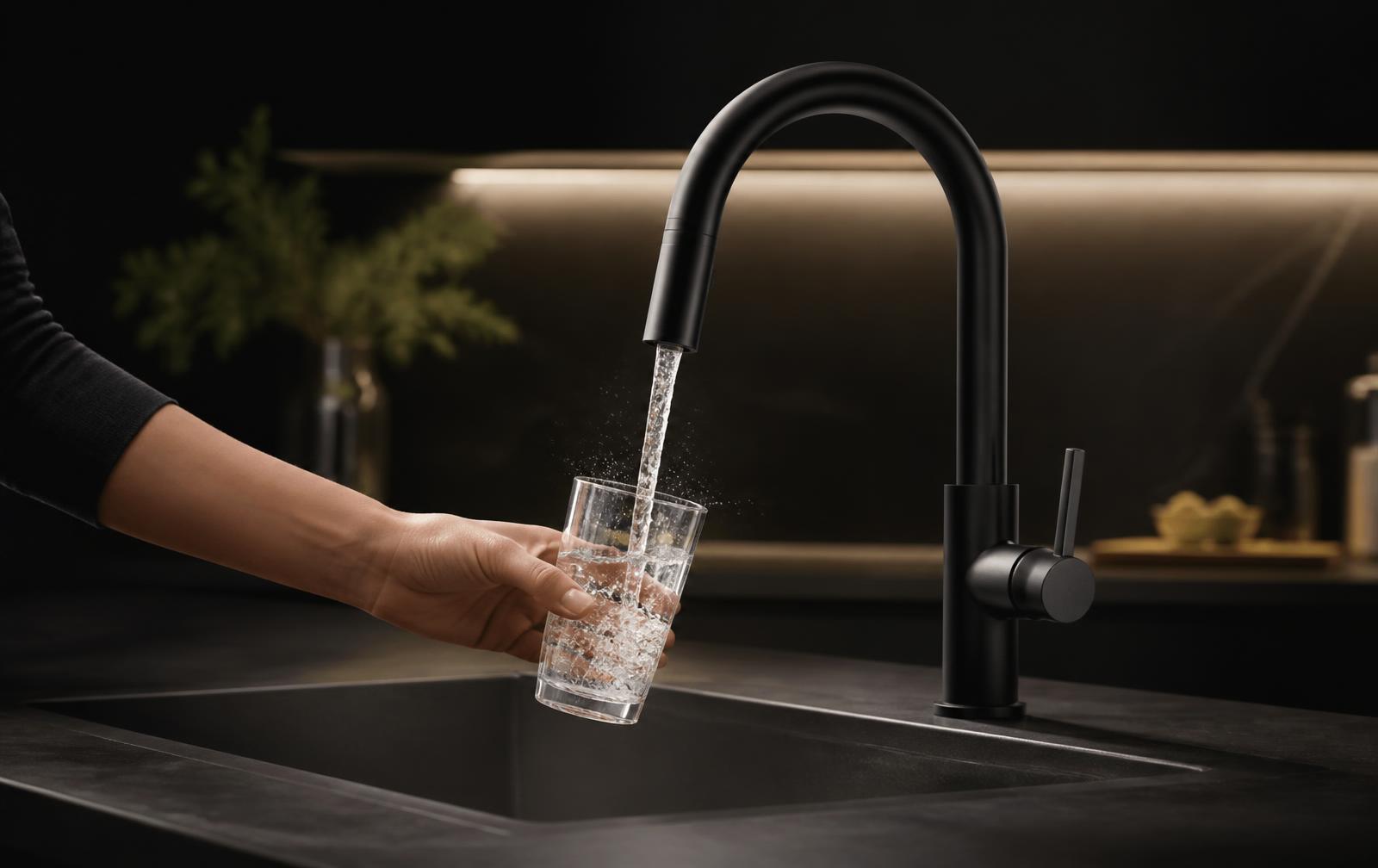
Delivered continuously, not bottled
The composition is produced at the tap on every draw. Nothing is dosed, nothing expires, and no plastic is involved in getting it to the glass.
General physiology is described here for context only. LonGeVa Water is drinking water; it is not presented as repairing DNA, slowing ageing, or treating, curing or preventing any condition.
Downloads
Brochures and technical documents
Printable documentation for specifiers, distributors and homeowners.
PDF · Consumer brochure
LonGeVa Water brochure
What LonGeVa Water is, how the filter produces it and what it means for daily hydration.
Request by emailPDF · Technical brochure
LonGeVa Media brochure
The chemistry behind the water, for specifiers and technical readers.
Request by email
Cost of the bottle habit
What bottled water really costs you
Bottled water is demineralised, plastic-aged and priced like fuel. Move the sliders to see the yearly figure — then compare it with water made at your own tap.
€655
Spent every year
On water you do not control
728
Plastic bottles per year
1,092 litres carried home
90 kg
CO₂e per year
Production and transport
€6,552
Over ten years
A LonGeVa filter pays back in about 1.8 years
Payback assumes an indicative €1,200 point-of-use installation. Ask us for a quotation for your home.
Start drinking it
Get a sizing recommendation for your home
Send your water details and we will tell you which LonGeVa Filter produces LonGeVa Water at your flow rate — and where it should be installed.